
Germany’s renewable energy market continued to grow in 2025, driven by strong additions in photovoltaics, wind power and battery storage. At the same time, auction results, industry responses, and political debates show that expansion varies considerably depending on technology. In the biogas and biomethane segment in particular, the regulatory framework remains a key influencing factor. Against the backdrop of geopolitical tensions, rising energy price risks, and continued import dependence, renewable energy is coming into focus. They make a significant contribution to climate protection, security of supply, and economic stability.
Review of Renewable Energy Development in 2025
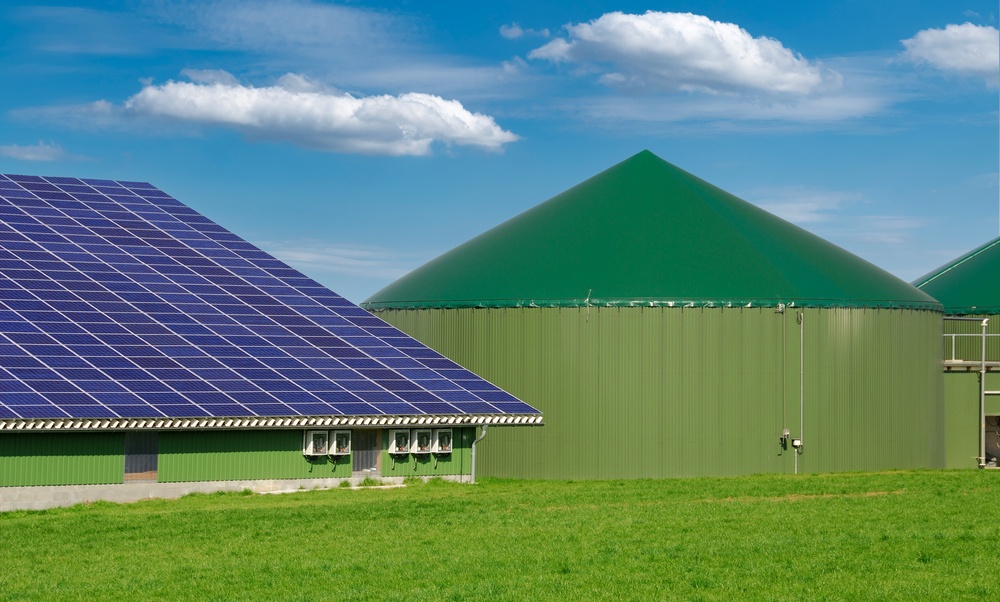
In 2025, installed renewable energy capacity increased by 21 GW to just under 210 GW. The largest contribution came from photovoltaics, which added 16.4 GW. This was followed by 4.6 GW of onshore wind and 0.3 GW of offshore wind. Regional hotspots were solar installations in Bavaria with 4.5 GW and wind turbines in North Rhine-Westphalia with 1.3 GW. Biomass remained at a low level, with around 55 MW.
In addition, around 526,000 new battery storage systems were installed, with nearly 3.7 GW of power and around 7.3 GWh of capacity. This included 83 newly registered large-scale battery storage systems. The total installed power capacity was 667 MW, and the total energy storage capacity was 1,244 MWh.
Market Sensitivity and Dependence on the Regulatory Framework
To market the energy they generate, developers and operators of larger installations participate in auctions run by the Federal Network Agency. These auctions specify both the auctioned volume and the maximum bid price. The lowest bids are awarded contracts until the defined auction volume has been reached. This mechanism creates competition among generators and helps to limit support costs and, in turn, electricity prices for consumers. Bid volumes and award values also provide insights into market dynamics. For future auction rounds, auction volumes and maximum prices serve as steering instruments.
For wind energy installations, the auction volume in the 1 February 2026 bidding round was 3,445 MW. With 924 bids totaling 7,858 MW, this auction was described by the Federal Network Agency as “heavily oversubscribed”. As a result, the volume-weighted average award value fell to 5.54 ct/kWh. By contrast, for solar installations on buildings and noise barriers, only 98 bids totaling 177 MW were submitted for an auction volume of 283 MW, meaning the auction was “undersubscribed”. For ground-mounted photovoltaic installations, the Federal Network Agency reported a “significantly oversubscribed” round. In the 1 December 2025 bidding round, 634 bids totaling 5,247 MW clearly exceeded the auction volume of 2,328 MW. The volume-weighted average award value stood at 5 ct/kWh.
If the Federal Network Agency sets the maximum price too low, bids fail to materialize. This was the case for biomethane, among other times, in September 2025. The Federal Network Agency stated: “No bids were submitted in last year’s biomethane auctions”. In the auction round for 1 April 2026, the ceiling value was therefore increased by 10 % to 23.13 ct/kWh. Whether this remuneration is sufficient for electricity generation plants will become clear from the number of bids submitted.
Regulatory Uncertainty Puts Pressure on Biomethane and Battery Storage Expansion
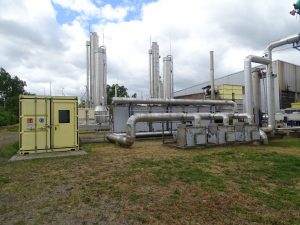
For biomethane injection plants, one of the current regulatory challenges lies in access to the gas grid. Until the end of 2025, grid access was governed by the Gas Grid Access Ordinance. In future, grid access is to be incorporated into the amended Energy Industry Act. The draft, for example, included a 10-year curtailment period for new installations, prompting the Berlin office for bioenergy to warn of “the end of the expansion of new biomethane projects”.
The regulatory framework is also decisive for the future development of electrical storage systems. Most recently, the Federal Network Agency caused irritation across the industry by calling grid fees into question. More than 150 companies, including municipal utilities and project developers, subsequently called for grandfathering protection for battery storage systems.
Market Participants’ Reactions Following the Publication of the Key Points of the Building Modernization Act (GMG)
The key points of the GMG (Building Modernization Act) attracted considerable attention in the biomethane market because they affect an already established market: by the end of 2025, Germany had 290 biomethane plants with a total production of 12.8 TWh. Accordingly, many reactions to the planned green gas quota were positive. Verbio described it as a “constructive signal for bioenergy and renewable gases.”
According to the draft GMG, from 1 January 2029, new oil and gas heating systems must use at least 10% renewable fuels. In addition, a balance-based quota for green gas and green heating oil for fuel suppliers will be introduced in 2028. This quota will start at up to 1%. BDEW called the agreement “a necessary first step,” while the Berlin office for bioenergy described it as a “fundamentally positive signal.”
Global Geopolitical Developments and Energy Independence
Against the backdrop of energy imports, security of supply, and geopolitical risks, it becomes clear why the highest possible share of domestic energy sources is gaining strategic importance. Destatis writes: “Germany is dependent on energy imports from abroad”; in 2024, the share of net imports in energy consumption stood at 67 percent. At the same time, the Federal Network Agency states that, in the period from 2025 to 2031, “the supply of electricity is ensured” if investments in renewable energies, H₂-ready gas-fired power plants, demand-side flexibility and grid expansion are implemented.
Reuters reported that oil and natural gas prices had risen sharply since the outbreak of the war in Iran and the closure of the Strait of Hormuz; around one-fifth of global oil and gas transport normally passes through this waterway. Reuters also wrote that renewable energies such as wind and solar can be produced from local and regional sources, whereas oil and gas are more heavily dependent on global markets and trade.
Conclusion
For Germany’s renewable energy market, 2025 was a year of growth but also of divergence. While photovoltaics, wind power, and battery storage continued to expand, biomethane showed particularly clearly how strongly investments and market momentum depend on the political and regulatory framework.
Against the backdrop of geopolitical uncertainty and Germany’s continued dependence on energy imports, one thing becomes clear: the expansion of renewable energies is not only a climate project, but also a strategic building block for security of supply and greater energy independence.
Source: April 20, 2026, www.greenvalue.de
Image source: www.shutterstock.com